Launch offer — valid today only

📄 Digital book in PDF · read it on your phone or print it

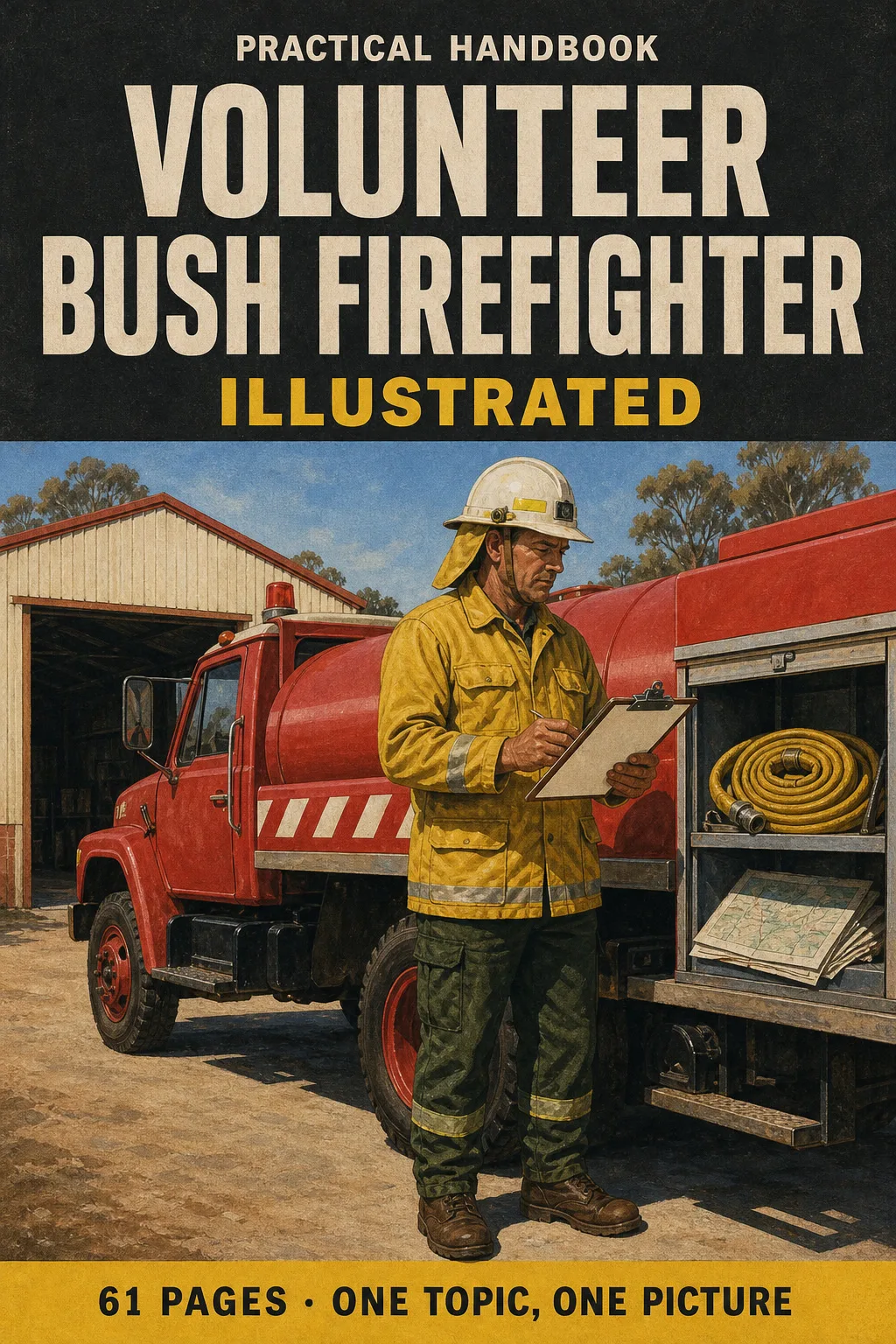
Volunteer Bush Firefighter Illustrated: Fire Behaviour, the Tanker and LACES in Drawings One Topic on Every Page

Written for Australian volunteer brigades: fire behaviour, slope and wind changes, fire danger ratings, your PPC, starting the pump, couplings, LACES, radio calls, the burnover drill and mop-up. Every topic has its own page: the drawing first, then what you need to remember. 61 illustrated pages.

I WANT THE ILLUSTRATED BOOK

🔒 Secure checkout · PDF by email · 30-day guarantee

Every topic, its own pageEvery routine drawn, with the explanation beside it
61 illustrated pages9 parts, from the fire triangle to the whole book on one page
Up-to-date sourcesAFDRS, AFAC doctrine and state rural fire service training material
PDF by emailFormat

Look Inside the Book

Every page has one big drawing and a box with the numbers, steps and checks you need to know:

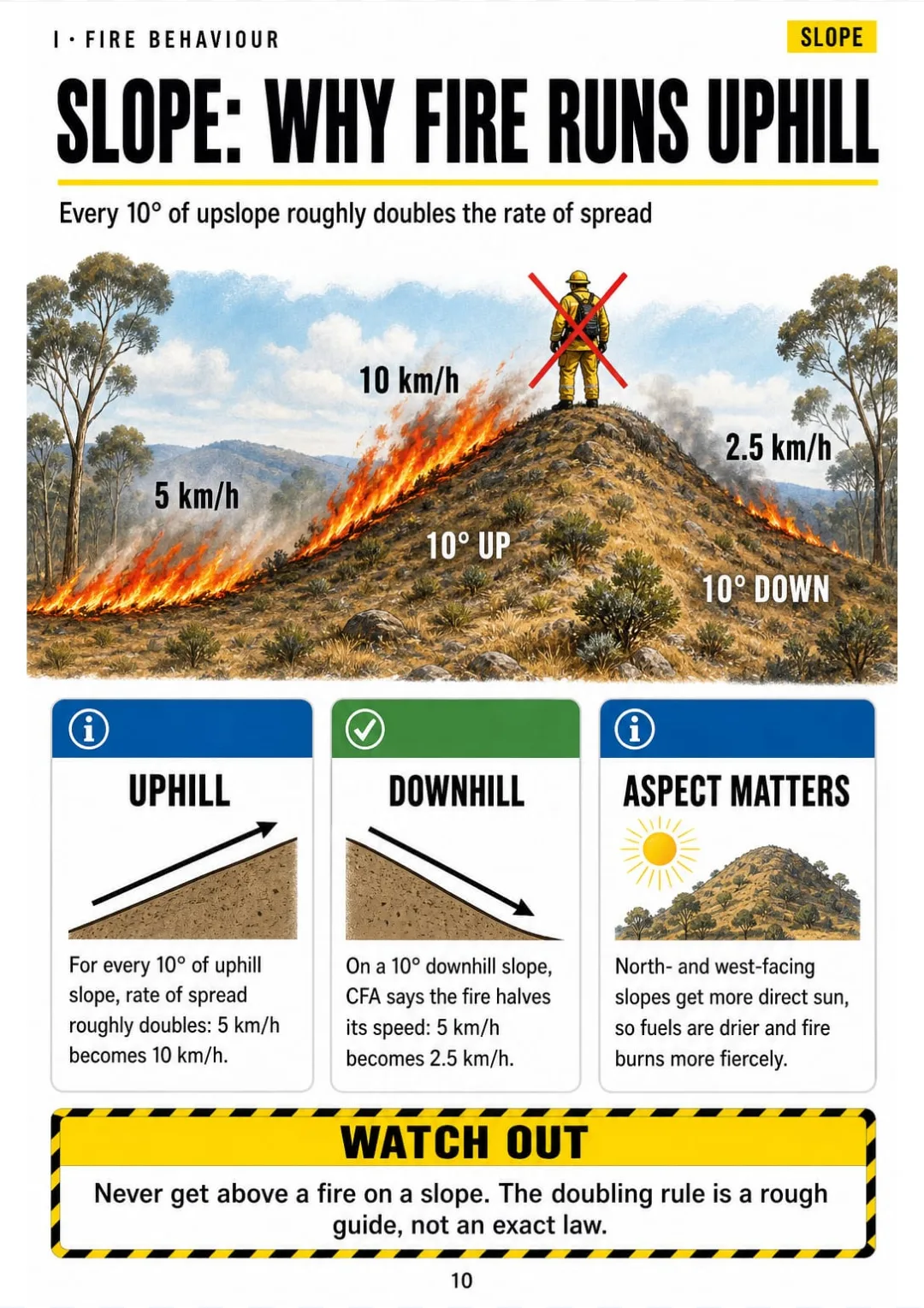
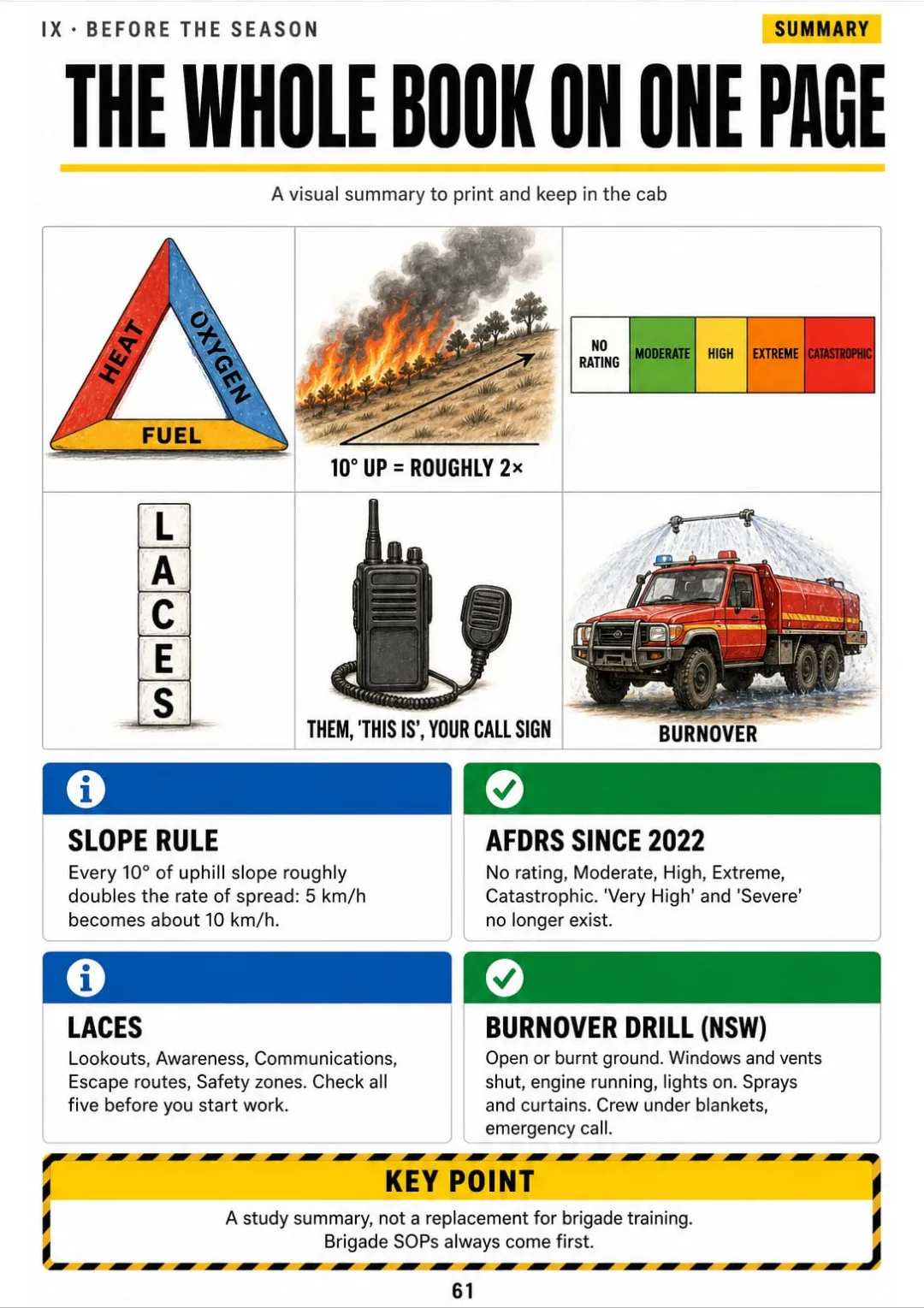
5 km/h on the flat, about 10 km/h on a 10° upslope.
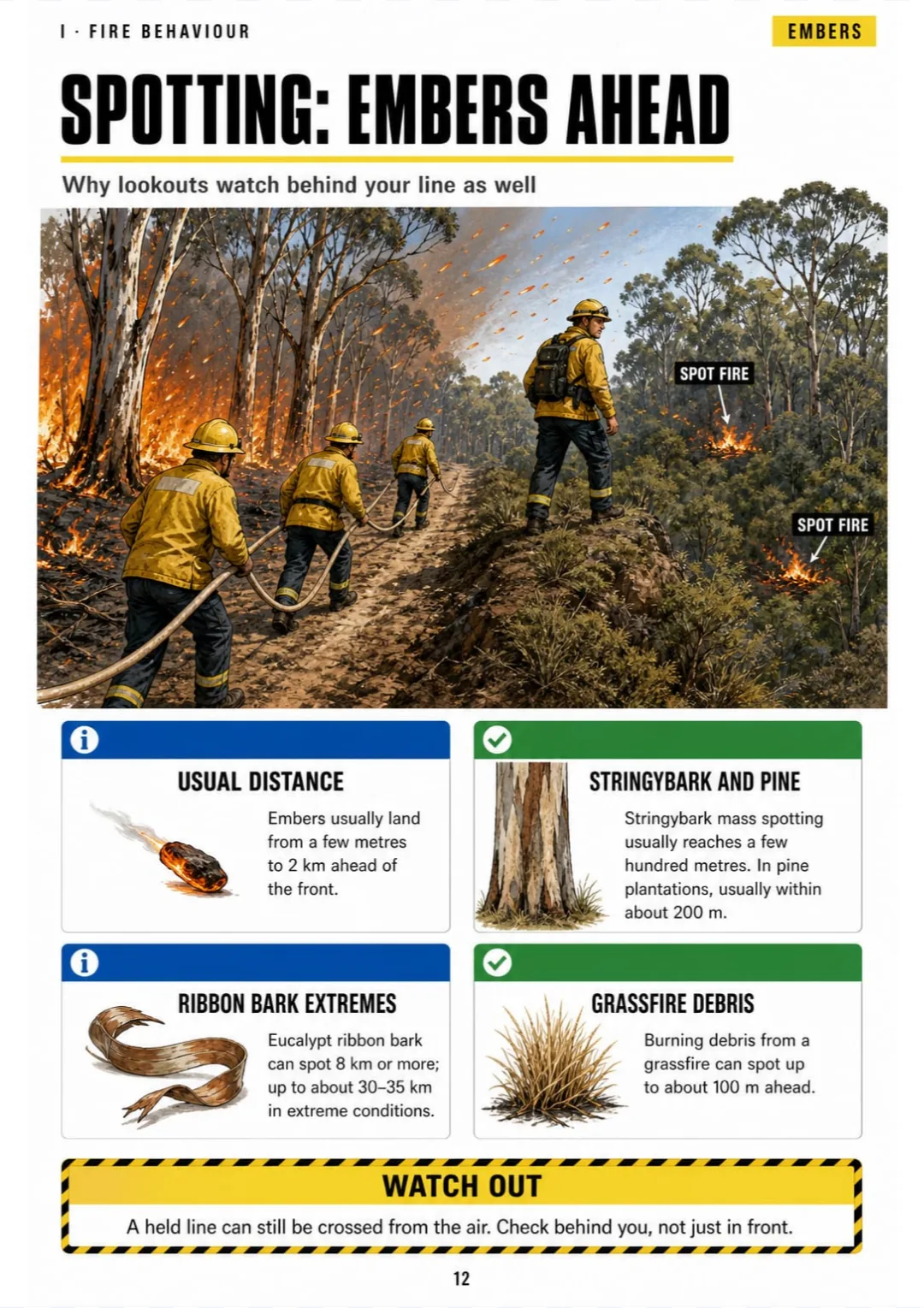
Embers usually land from a few metres to 2 km ahead of the front.
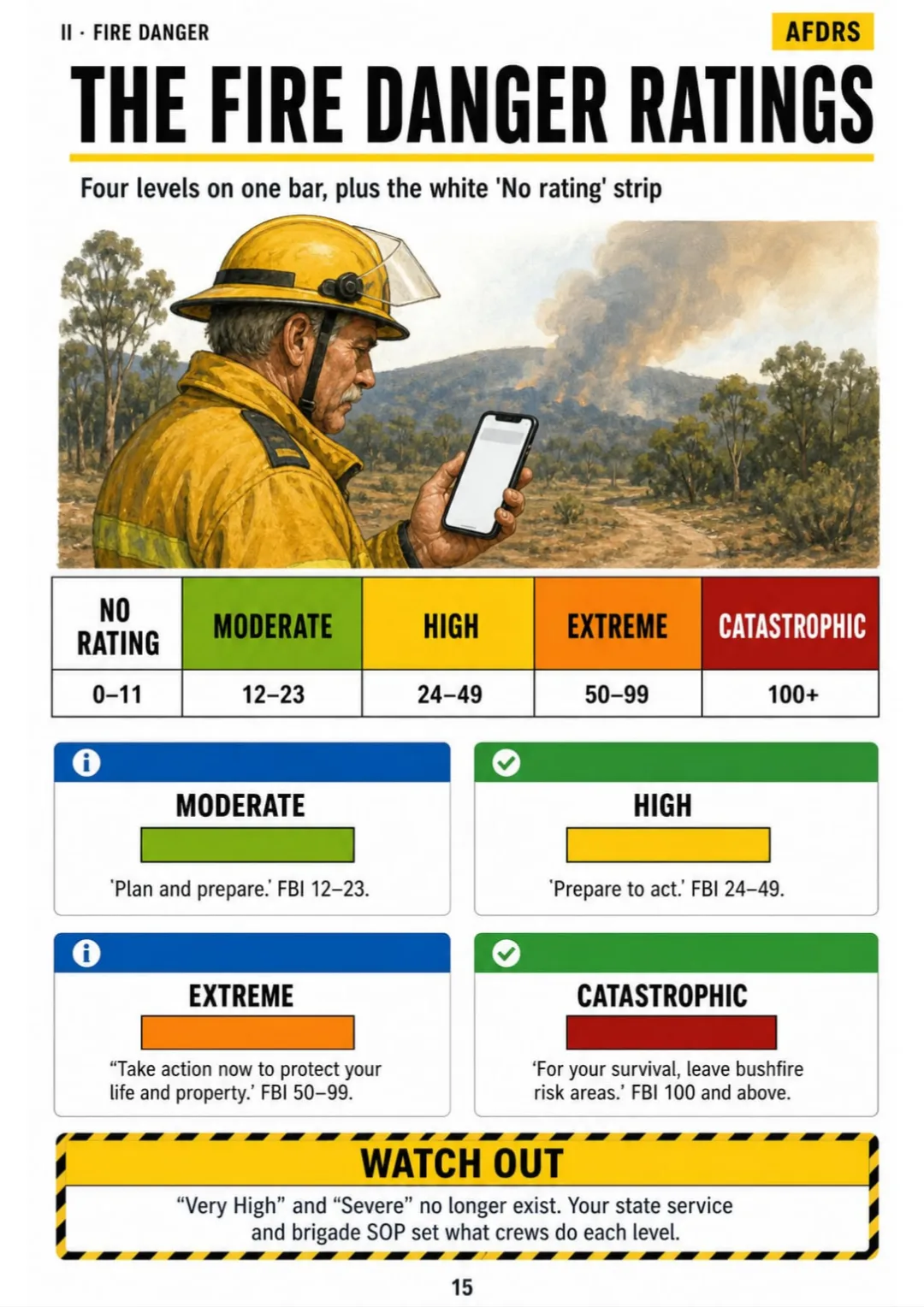
AFDRS since 1 September 2022: Moderate, High, Extreme, Catastrophic, plus 'No rating'.
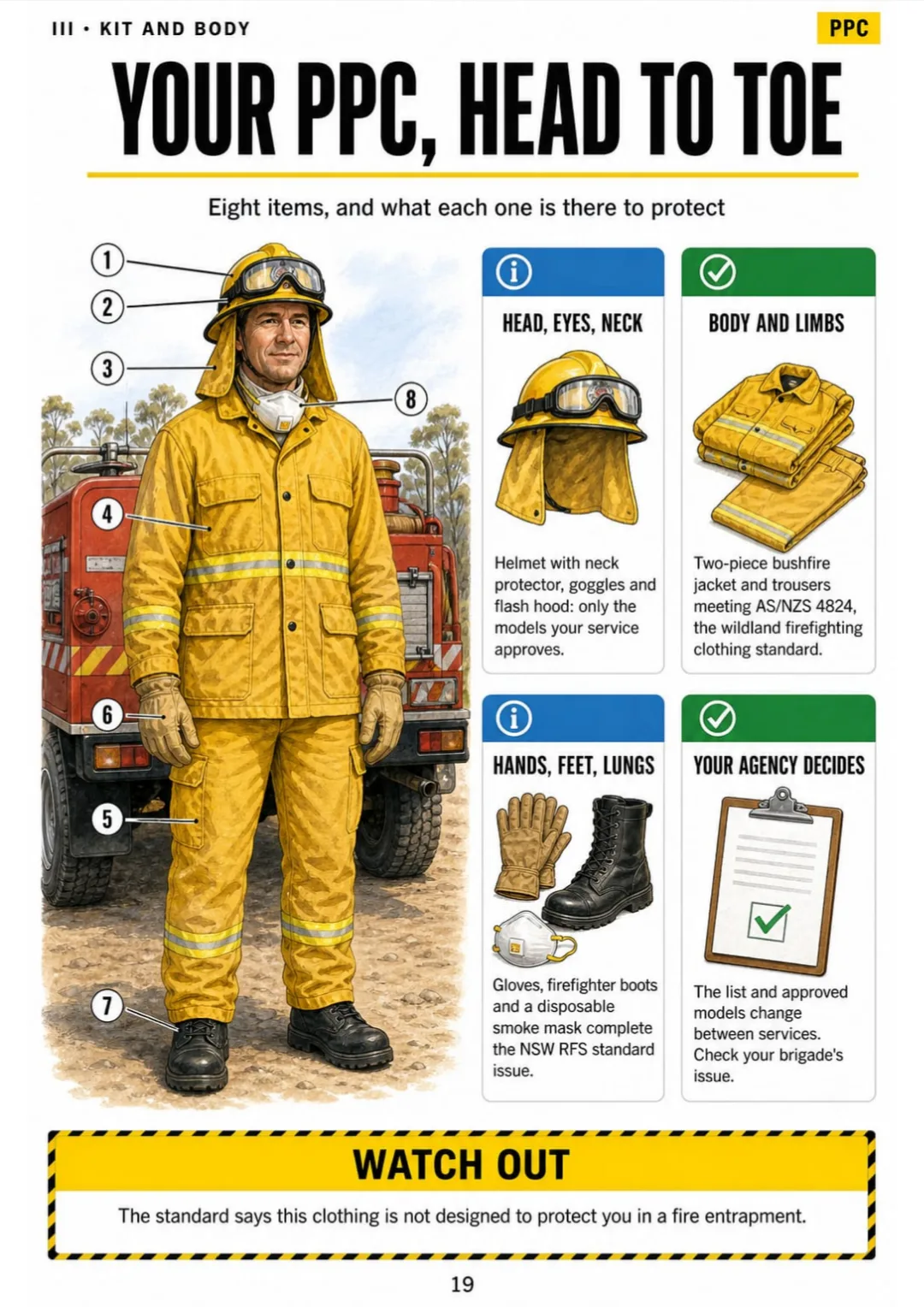
Helmet, goggles, flash hood, jacket, trousers, gloves, boots, P2 mask: the bushfire PPC set, labelled.
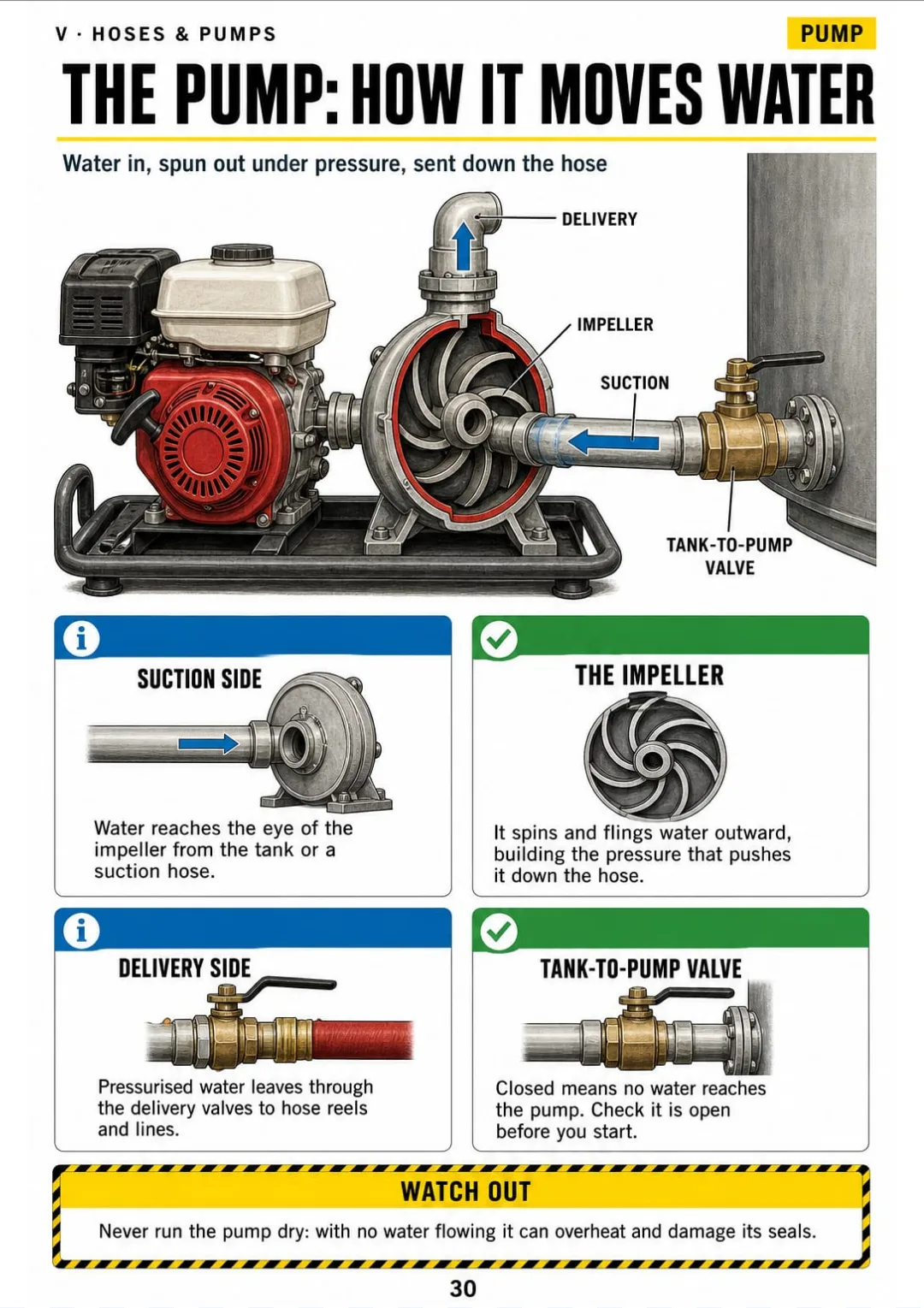
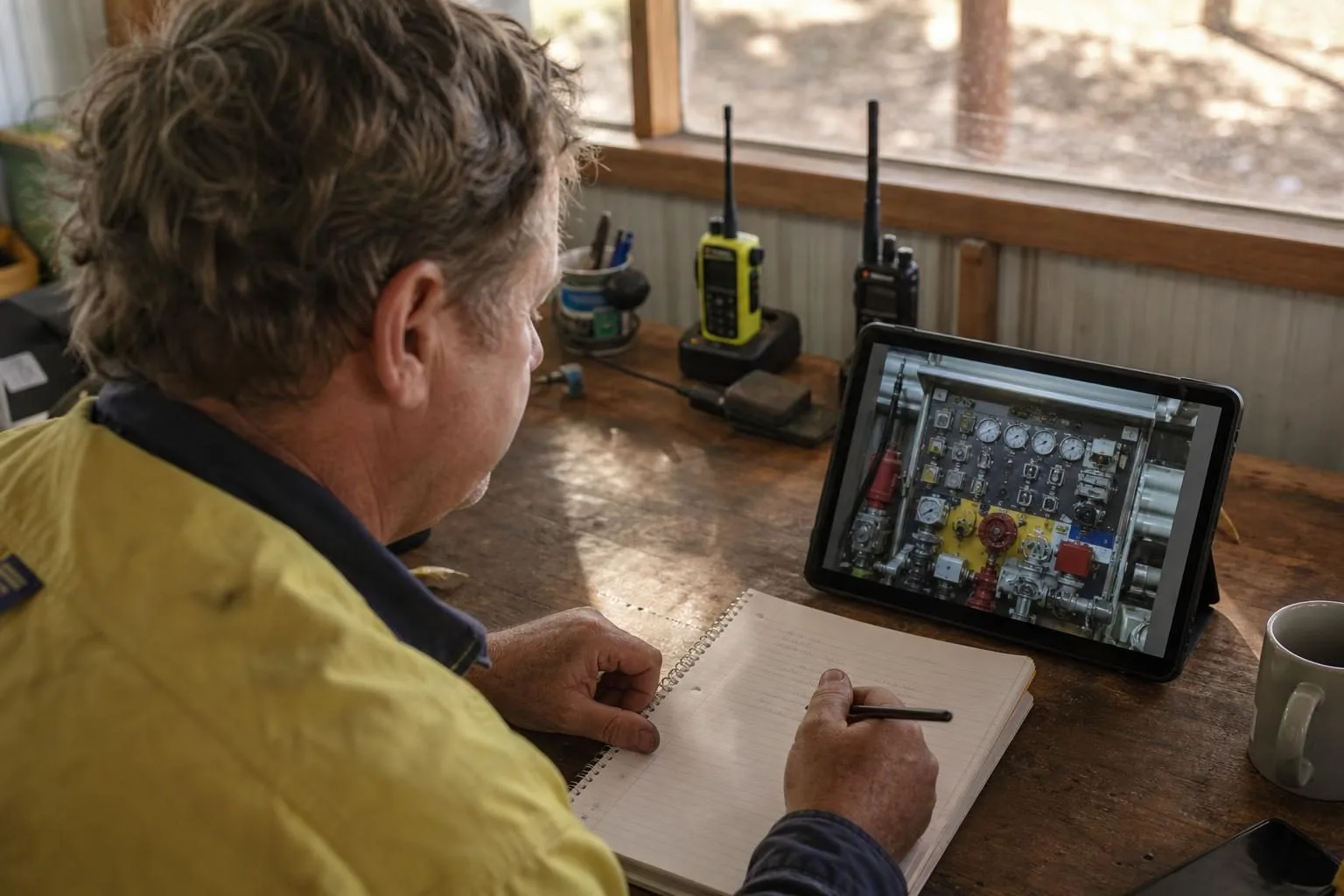
Cut-away pump: suction, impeller, delivery and the tank-to-pump valve, labelled in one drawing
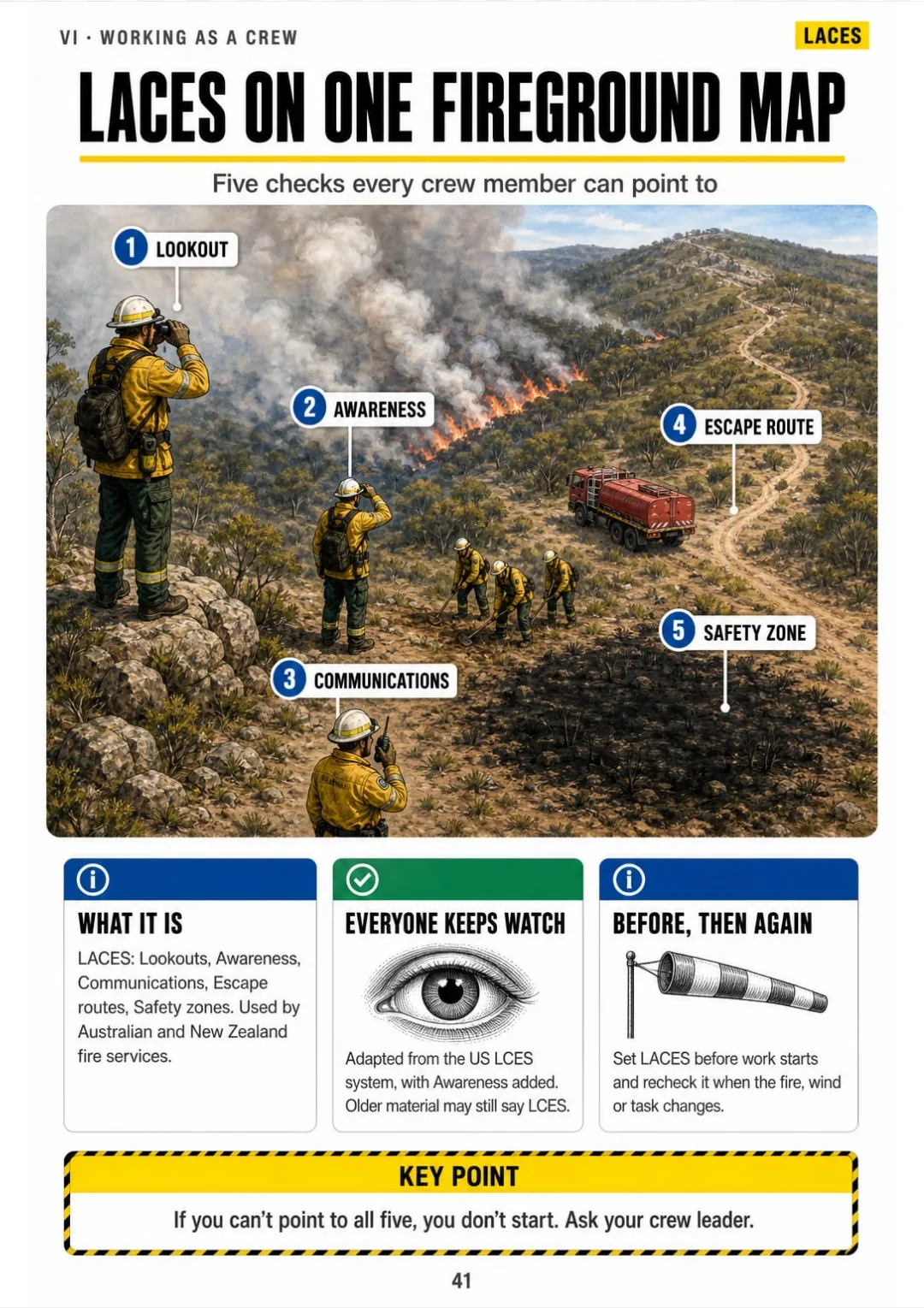
LACES: Lookouts, Awareness, Communications, Escape routes, Safety zones
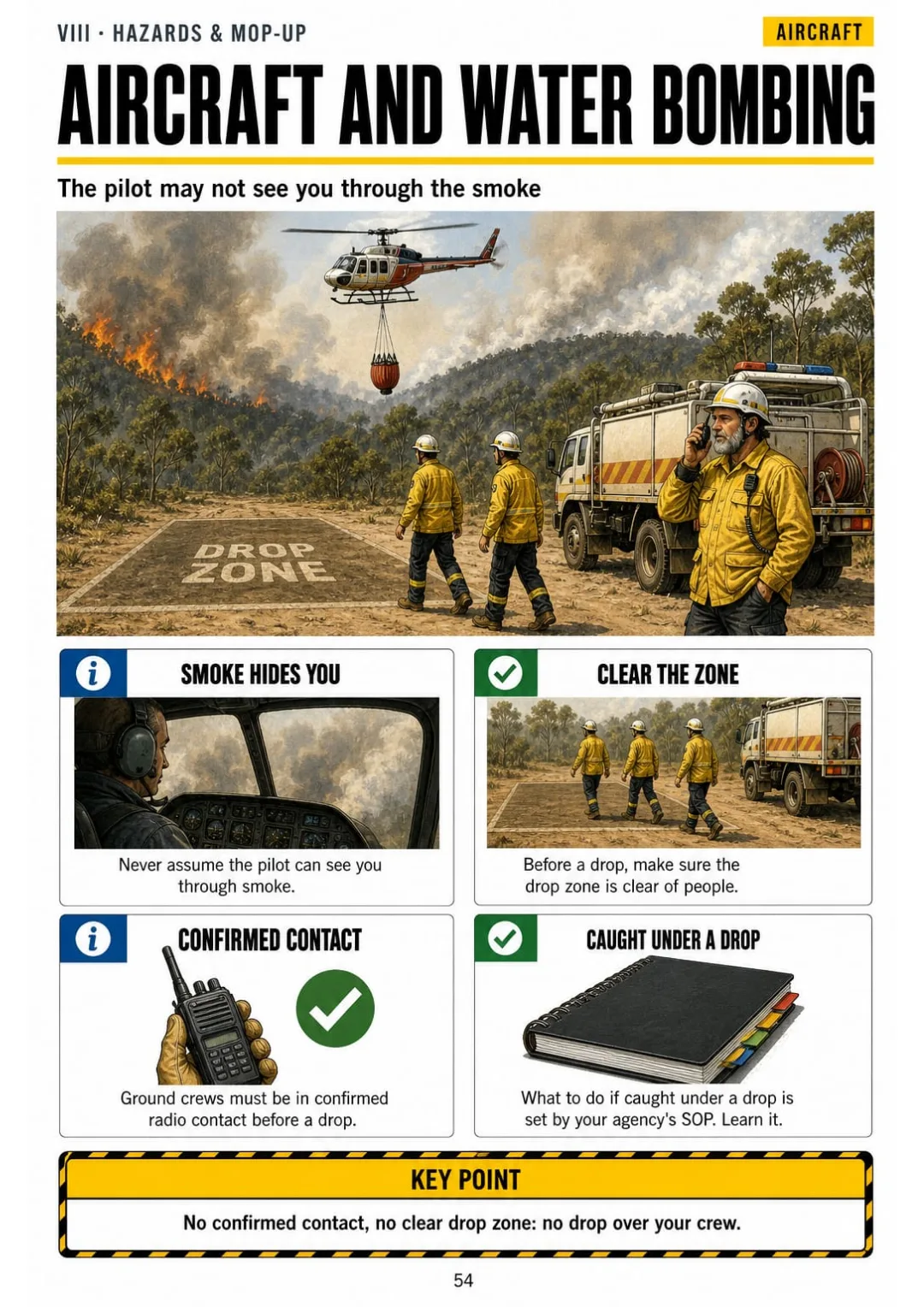
Before any drop: drop zone clear and ground crews in confirmed contact.
The book on one page: 10° uphill roughly doubles spread, 4 ratings plus No rating, LACES, burnover drill

Swipe to see more →

These are real pages from the book. The table of contents is the full one: 9 parts and 57 topics.

The Problem Isn't You. It's How It Was Explained.

It's a hot morning and the fire danger rating says Extreme. The crew leader asks what that changes for your crew today.

You know you've read it. But the manual covers the ratings in paragraphs, between acronyms and footnotes, and nothing spells out what each level means for you.

AFDRS since 1 September 2022: Moderate, High, Extreme, Catastrophic, plus 'No rating'.

In the book, the ratings take one page: Moderate, High, Extreme and Catastrophic, plus No rating, drawn as one scale, and each level shows what it means for your day.

It's the same for slope, the wind change, your PPC, the pump and LACES: each one has its own page.

So you look at the rating and you know what that level means and what to do, without going back to the manual.

COMPARE FOR YOURSELF

The Same Topic, Two Ways to Learn It

THIS
  • The manual: line after line
  • Wind changes explained only in words
  • You reach the fireground still unsure
A change in wind direction is among the most significant factors influencing fire behaviour. In south-eastern Australia, a period of hot, dry north-westerly winds is commonly followed by the passage of a south-westerly change, whereupon the eastern flank of the fire, which may previously have been of considerable length and relatively low intensity, becomes exposed to the new wind direction and may consequently develop into a broad head fire, with a marked increase in the length of the active fire edge.
FOR THIS
  • The wind change in one drawing
  • The steps in a box
  • You see it and you get it
Embers usually land from a few metres to 2 km ahead of the front.
CONTENTS

Take a Look at the 9 Parts and 57 Topics

How bushfire behaves, fire danger, your kit, the tanker, hoses and pumps, crew work, radio, hazards and burnover, and a pre-season review: 61 pages, all illustrated

IHow Bushfire Behaves · pp. 5-14
  1. The fire triangle: heat, fuel, oxygen
  2. How heat travels: radiation, convection, conduction
  3. Fuel: fine, heavy and how much
  4. Fuel layers: surface, near-surface, elevated, bark, canopy
  5. Weather: temperature, humidity, wind
  6. Slope: why fire runs uphill
  7. The parts of a fire
  8. Spotting: embers ahead of the front
  9. The wind change: the flank becomes the head
  10. Grass fire vs forest fire
IIFire Danger and Your Day · pp. 15-18
  1. The fire danger ratings: what each level means for you
  2. Total fire bans and the declared fire season
  3. Reading the day: morning, afternoon, evening
  4. Signs the fire is about to change
IIIYour Kit and Your Body · pp. 19-23
  1. Personal protective clothing, head to toe
  2. Wearing PPC properly
  3. Water, heat and fatigue
  4. Smoke and your lungs
  5. Fit for the line: telling your crew leader
IVThe Tanker · pp. 24-29
  1. Tanker categories at a glance
  2. Lockers and gear: where everything lives
  3. The pre-start check, in order
  4. The crew protection system
  5. Riding and moving safely
  6. Parking the tanker on the fireground
VHoses, Pumps and Water · pp. 30-37
  1. The pump: how it moves water
  2. Starting the pump, step by step
  3. Hose sizes and what each is for
  4. Couplings and connecting hose
  5. Branches and nozzles: jet, spray, fog
  6. Making water last
  7. Drafting and refilling
  8. Hose handling: laying out and making up
VIWorking as a Crew · pp. 38-46
  1. Who's who: the crew and the chain of command
  2. Your role as a crew member
  3. The briefing: what you should hear
  4. LACES before you start work
  5. Escape routes and safety zones
  6. Anchor points and the direct attack
  7. Indirect attack, containment lines and back-burning
  8. Hand tools: rake hoe, McLeod, axe, drip torch
  9. Handover at the end of a shift
VIIRadio and Messages · pp. 47-51
  1. Fireground radio basics
  2. How to make a radio call
  3. Plain language and the phonetic alphabet
  4. The situation report
  5. Emergency and priority calls
VIIIHazards, Burnover and Mop-up · pp. 52-58
  1. Trees: the hazard you can't hear coming
  2. Power lines and electricity
  3. Aircraft and water bombing
  4. Vehicle burnover: the drill
  5. Burnover on foot
  6. Mop-up: blacking out the edge
  7. Patrol and the fire that comes back
IXBefore the Season: Review · pp. 59-61
  1. The 15 most common mistakes on the fireground
  2. Your one-page pre-season checklist
  3. The whole book on one page

One Page, One Topic, All Clear

Think of it this way:

The crew leader calls a LACES check before you start work on the edge, and you need all five parts, in order, right now.

You open the LACES page and see one fireground map with the lookout, the radio, the escape route and the safety zone marked on it.

Cut-away pump: suction, impeller, delivery and the tank-to-pump valve, labelled in one drawing

It's the same with slope, the wind change, the pump, the burnover drill and mop-up: each one on its own page.

Volunteer Bush Firefighter Illustrated is 9 parts and 57 topics, all drawn, and it finishes with the 15 most common mistakes, a pre-season checklist and the whole book on one page.

What you see drawn, you don't have to memorize.

What's Inside Volunteer Bush Firefighter Illustrated:

Ipp. 5-14

How Bushfire Behaves

The fire triangle, how heat travels, fuel and fuel layers, weather, slope, the parts of a fire, spotting, the wind change, and grass fires vs forest fires.

IIpp. 15-18

Fire Danger and Your Day

The fire danger ratings, total fire bans, reading the day and the signs a fire is about to change, so you know what each level changes for your crew before you leave the station.

IIIpp. 19-23

Your Kit and Your Body

PPC head to toe and how to wear it, water, heat and fatigue, smoke, and telling your crew leader when you're not fit for the line.

IVpp. 24-29

The Tanker

Tanker categories, lockers and gear, the pre-start check in order, crew protection, riding safely and parking on the fireground.

Vpp. 30-37

Hoses, Pumps and Water

How the pump moves water, starting it step by step, hose sizes, couplings, branches and nozzles, making water last, drafting and hose handling.

VIpp. 38-46

Working as a Crew

The chain of command, your role, the briefing, LACES, escape routes and safety zones, direct and indirect attack, hand tools and handover.

VIIpp. 47-51

Radio and Messages

Radio basics, how to make a call, plain language and the phonetic alphabet, the situation report, and emergency and priority calls.

VIIIpp. 52-58

Hazards, Burnover and Mop-up

Trees, power lines, aircraft and water bombing, the vehicle burnover drill, burnover on foot, mop-up and patrol.

IXpp. 59-61

Before the Season: Review

The 15 most common mistakes, a one-page pre-season checklist and the whole book on one page.

At the end of the book: The 15 most common fireground mistakes, a one-page pre-season checklist and the whole book on one page.
Plus: 2 Free Books

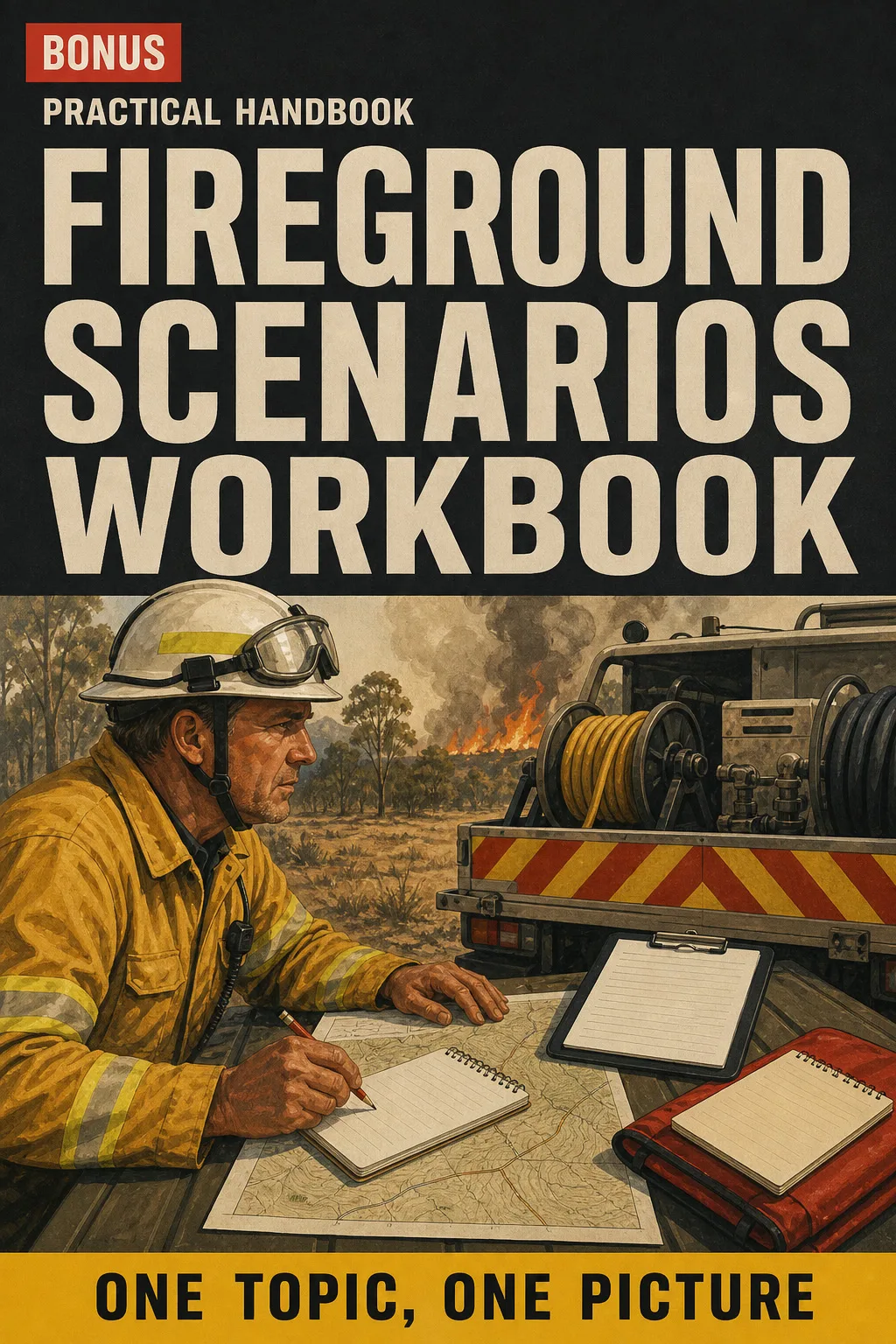
Fireground Scenarios Workbook

BONUS 1: «Fireground Scenarios Workbook»

Value on its own: US$ 17.90

Practise the decisions before the season: a drawn map, a wind change, a slope, and you work out the escape route, the safety zone and the radio call, with answers explained.

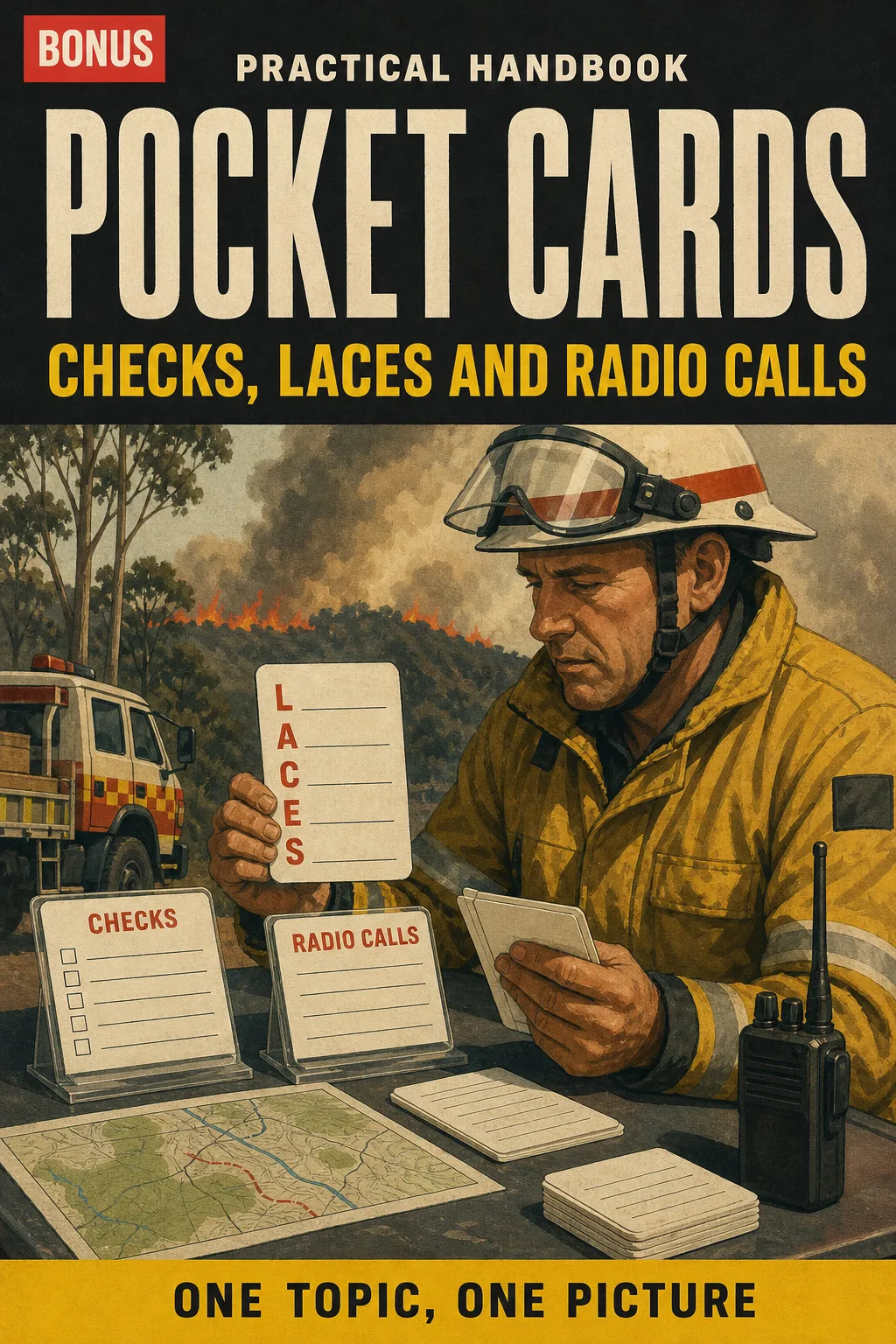
Pocket Cards: Checks, LACES and Radio Calls

BONUS 2: «Pocket Cards: Checks, LACES and Radio Calls»

Value on its own: US$ 14.90

The pre-start check, the LACES steps, the radio message template and the 15 most common mistakes on printable cards you can keep in the cab.

Volunteer Bush Firefighter Illustrated with 2 Free Books

  • Volunteer Bush Firefighter Illustrated: 61 illustrated pagesUS$ 63
  • BONUS 1: Fireground Scenarios WorkbookUS$ 17.90
  • BONUS 2: Pocket Cards: Checks, LACES and Radio CallsUS$ 14.90
  • High-resolution PDF to printIncluded
Total value US$ 95.80
YOUR PRICE:
US$ 27
You save US$ 68.80
YES, I WANT VOLUNTEER BUSH FIREFIGHTER ILLUSTRATED FOR US$ 27

📄 This is a digital PDF book sent to your email: nothing is printed or shipped.

Secure purchaseEncrypted payment30-day guarantee

PDF by email: We email you Volunteer Bush Firefighter Illustrated as a PDF, together with the two free books. It's a single payment: no installments, no extra charges.

Who This Book Is For

You've just joined the brigade

You've just joined the brigade

Basic training covered a lot, fast. Here the tanker, the pump and your role in the crew get a page each, so it all settles in order.

The fire season is weeks away

The fire season is weeks away

You go over the pre-start check, LACES and the burnover drill at a glance, always in the same order.

You've done a few seasons

You've done a few seasons

Print it and keep it in the cab to check the radio call format or the pump layout before you roll out, or to brief new members one page at a time.

Everything You Get Today

US$ 95.80US$ 27
YES, I WANT VOLUNTEER BUSH FIREFIGHTER ILLUSTRATED FOR US$ 27

📄 This is a digital PDF book sent to your email: nothing is printed or shipped.

30DAYS
GUARANTEE

30-Day Guarantee

Try Volunteer Bush Firefighter Illustrated for 30 days, bonus books included.

We refund everything if the file won't open, if the book isn't what you see here, if you were charged twice or if the email doesn't arrive. Just email us.

You pay once. No subscriptions.

Frequently Asked Questions

Is it for me if I've only just joined my brigade?

Yes, wherever your brigade is: NSW, Vic, SA, WA, Qld or Tas. It follows what's shared across Australia (the fire danger ratings, LACES, fire behaviour, the burnover drill), in metric units. Where your state names a tanker or a radio call differently, your brigade's SOPs come first. It starts with the fire triangle and builds up to crew work; if you've done a few seasons, it works as a refresher that goes in order.

Does it work in my state, and where does the content come from?

It's checked against current Australian guidance: the Australian Fire Danger Rating System, AFAC doctrine and the training material published by the state and territory fire services. It covers what's common to every state. Where your service does it differently, like tanker layouts or radio call signs, your brigade's SOPs come first.

Is it official material?

No. It's an independent study book. No fire agency issued, approved or endorsed it. Your brigade's SOPs always come first.

Does it replace brigade training?

No. It backs up the training and the hands-on drills you do with your brigade. It doesn't give you a qualification or count towards any brigade assessment. Back-burning is planned and led by the crew leader only.

Are the practice scenarios the ones from brigade assessments?

No. The scenarios in the workbook were written for this book. They aren't taken from any agency assessment.

When and how does it arrive?

As a PDF by email, sent to the address you enter at checkout. The 2 bonus books come with it.

Do I have to pay every month?

No. You pay once.

Can I have it on paper?

Yes. It's a PDF, so you can print it at home or at a print shop and keep it in the cab.

How does the refund work?

You have 30 days. We refund everything if the file won't open, if the book isn't what you see on this page, if you were charged twice or if the email doesn't arrive: just email us.

Before You Close This Page

No more rereading with nothing sticking.

The burnover drill drawn step by step, to go over before you practise it with your brigade.

You get to the fireground knowing where everything is.

Drawings make studying faster.

The book is right below.

One-time payment: US$ 27 · Guarantee: 30 days · PDF by email

YES, I WANT VOLUNTEER BUSH FIREFIGHTER ILLUSTRATED FOR US$ 27

📄 This is a digital PDF book sent to your email: nothing is printed or shipped.